When Your Greatest Technology Investment Becomes Your Biggest Operational Risk

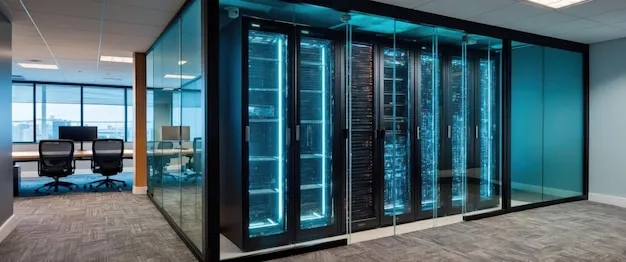
Photo: enterprise server room aging technology infrastructure business risk, via img.freepik.com
The Promise That Aging Code Can No Longer Keep
There was a time when building your own enterprise software felt like the ultimate strategic move. You owned the roadmap. You controlled the feature set. You were not beholden to a vendor's pricing model or release schedule. For many mid-sized and large American enterprises, custom development was not just a technology decision — it was a statement of organizational ambition.
That ambition, however, carries a long tail. The systems that once felt like competitive moats now frequently present as operational liabilities, consuming disproportionate IT budgets, resisting integration with modern tooling, and quietly accumulating what engineers call technical debt — the compounding cost of shortcuts, outdated dependencies, and architectural decisions that made sense in 2009 but are increasingly untenable today.
The question facing enterprise technology leaders in 2025 is no longer whether their legacy custom systems have aged. The question is how badly, and what to do about it.
Recognizing the Red Flags Before They Become Emergencies
Technical debt rarely announces itself with a dramatic system failure. More often, it surfaces as a pattern of friction — small inefficiencies that accumulate until they represent a genuine strategic drag.
Several warning signs warrant immediate attention from engineering and executive leadership alike.
Disproportionate maintenance spend. When a system consumes more than 40 percent of an IT department's annual budget simply to keep functioning — without delivering meaningful new capability — that ratio signals structural decay. Maintenance-heavy systems tend to crowd out investment in innovation.
Institutional knowledge concentration. If the operational continuity of a core business system depends on two or three engineers who have been with the organization for fifteen years, that system carries a human-capital risk that does not appear on any balance sheet. The departure of a single architect can render a proprietary platform functionally unmaintainable.
Integration resistance. Modern enterprise environments demand interoperability. Systems that cannot readily connect to cloud-based platforms, third-party data sources, or contemporary APIs force organizations into expensive workarounds — custom middleware, manual data transfers, and brittle point-to-point connections that introduce additional failure vectors.
Recruiting friction. When a technology stack is so dated that it actively complicates the ability to attract engineering talent, the business implications extend well beyond IT. Candidates with current skill sets are unlikely to accept roles requiring them to work exclusively in discontinued frameworks or unsupported languages.
Case Studies in Costly Reckoning
The consequences of deferring intervention are well-documented across industries.
A regional financial services firm in the Midwest spent eleven years building a proprietary loan origination platform. By 2021, the system processed over $2 billion in annual transactions but ran on an unsupported database engine and relied on a codebase with minimal documentation. When the firm attempted to integrate a regulatory compliance module required under new federal guidance, the effort ballooned from a projected six-week implementation to an eighteen-month rebuild. The total remediation cost exceeded $4.7 million — more than three times what a modern replacement would have required at the outset.
A national retail chain encountered a similar inflection point with its inventory management system, which had been developed in-house during the early e-commerce era. The system could not support real-time omnichannel inventory visibility, a capability that had become table stakes for competitive retail operations. Rather than patch an architecture that was never designed for distributed data models, the company ultimately replaced the platform entirely — absorbing significant disruption that proactive modernization could have staged more manageably.
These are not cautionary tales about poor engineering. They are illustrations of what happens when organizations allow short-term continuity concerns to override long-term architectural judgment.
A Framework for the Build-Versus-Replace Decision
Not every aging custom system demands immediate replacement. The evaluation framework enterprise leaders should apply involves four intersecting dimensions.
Strategic alignment. Does the system support a core business function that differentiates the organization in its market? If so, the calculus around continued investment shifts — though the form of that investment may need to change significantly.
Total cost of ownership. Beyond direct maintenance spend, organizations should account for opportunity cost: the engineering capacity that cannot be deployed toward growth initiatives because it is absorbed by system upkeep. A realistic TCO calculation frequently makes replacement economics look more favorable than surface-level budget comparisons suggest.
Modernization feasibility. Some systems can be incrementally refactored — decomposed into modular components, re-platformed to supported infrastructure, or augmented with API layers that extend functionality without full replacement. Others have architectural foundations that make incremental improvement prohibitively expensive. A technical audit by an objective third party is often necessary to make this determination honestly.
Risk exposure. Security vulnerabilities, compliance gaps, and business continuity risks associated with unsupported technology stacks represent real financial exposure. Quantifying that exposure in concrete terms — potential regulatory penalties, breach remediation costs, downtime impact — often shifts the internal conversation from a technology discussion to a risk management imperative.
The Cost of Waiting Is Not Static
One of the most persistent misconceptions in enterprise technology governance is that deferring a modernization decision preserves optionality. In practice, the opposite is frequently true. Technical debt compounds. Integration complexity increases as the surrounding ecosystem evolves. The pool of engineers capable of supporting older platforms continues to contract.
Organizations that treat aging custom systems as stable infrastructure rather than depreciating assets are, in effect, making a passive investment decision — one that tends to yield diminishing returns over time.
At ProelioSoft, we work with enterprise clients across industries who are navigating exactly this inflection point. The organizations that manage it most effectively share a common trait: they approach the evaluation with rigor and objectivity, resisting both the sunk-cost bias that argues for preservation and the disruption anxiety that argues for indefinite delay.
The technology you built to win should not become the constraint that prevents you from competing. Identifying that threshold — and acting on it deliberately — is one of the most consequential decisions enterprise leadership teams face today.