The Review Queue Is the New Bottleneck: What AI Coding Assistants Actually Cost Your Engineering Organization
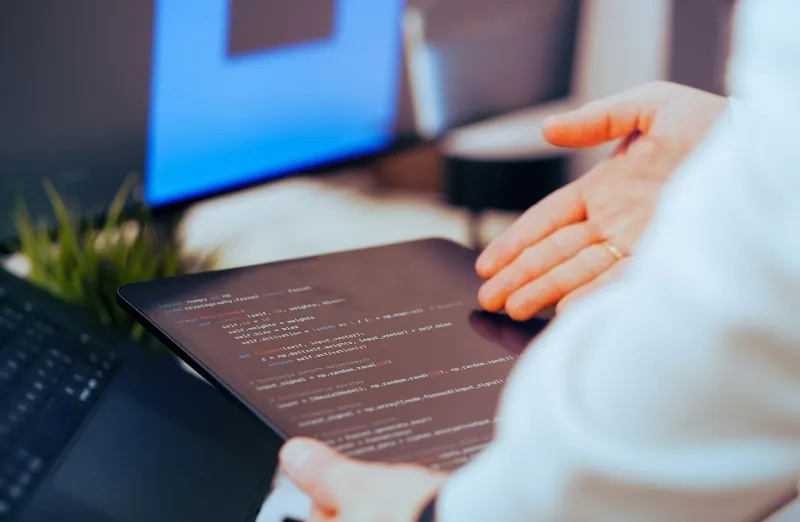
Across corporate America, the rollout of AI coding assistants has become a checkbox item on digital transformation roadmaps. Boards hear about seat licenses purchased, developer adoption percentages, and lines of code generated. What rarely makes it into the quarterly business review is a harder truth: someone still has to read, verify, and stand behind every one of those lines.
The result is a structural shift in where engineering effort actually goes. Senior engineers who once spent their hours designing systems now spend disproportionate portions of their week triaging pull requests produced by machines at machine speed. The bottleneck hasn't disappeared — it has moved, quietly, into the review queue.
The Arithmetic Nobody Ran Before the Rollout
When an assistant can generate a plausible-looking implementation in seconds, a developer can open five pull requests in the time it used to take to open one. That sounds like a fivefold productivity gain until you account for the reviewer on the other end of the pipeline, whose throughput has not changed at all.
This is a classic queueing problem, and enterprises have run headlong into it before — in help desks, in procurement, in every system where generation capacity outpaced approval capacity. AI-assisted development is simply the latest and most dramatic instance. The generated code arrives faster than human judgment can process it, and judgment is the one input that cannot be parallelized away.
Worse, AI-generated code has a particular quality profile. It is often superficially clean — well-named, well-formatted, idiomatic — which lowers reviewers' guardrails precisely when scrutiny should be highest. Subtle concurrency bugs, incorrect edge-case handling, and quietly wrong business logic hide inside code that looks right. Reviewing it correctly can take longer than reviewing human code, because the reviewer cannot rely on familiar heuristics about where mistakes typically live.
Vanity Metrics In, Real Signal Out
The prevailing measurement habit — counting seats deployed and usage rates — tells leadership almost nothing about whether the investment improved anything. Adoption is an input metric. Outcomes live elsewhere.
Three measures deserve a permanent place on the engineering dashboard:
- Review latency. How long does a pull request sit before receiving substantive review? If this number is climbing since the assistant rollout, your generation capacity has outrun your verification capacity.
- Defect escape rate by origin. Tag defects by whether the contributing code was AI-assisted or human-authored. Most organizations will find the difference instructive — and few have bothered to measure it at all.
- Rework cycles. How many rounds does a change go through before merge? Rising churn per pull request suggests the assistant is producing volume that fails review repeatedly, consuming more organizational time than it saves.
An enterprise that tracks these three numbers will have a far more honest picture of its AI investment than one tracking login rates. And the picture may be uncomfortable: in several configurations, the honest math shows net effort increasing even as raw output soars.
Architectural Consequences Compound Over Time
There is a slower-burning problem underneath the queueing issue. Codebases absorb the character of the code written into them. AI assistants, optimized for plausibility and speed, tend to produce locally reasonable implementations that drift from systemic intent. Over months, this shows up as architectural erosion: duplicated abstractions, inconsistent patterns across modules, and interfaces that no longer reflect a coherent design.
Architecture review — already underfunded at most US enterprises — becomes the second bottleneck after code review. Teams that once debated design decisions in planning sessions now discover those decisions were made implicitly, one accepted suggestion at a time, by developers moving too fast to ask whether the suggestion fit the system.
The mitigation is not to abandon the tooling. It is to be deliberate about where generation is cheap and where verification is expensive. Boilerplate, test scaffolding, and well-bounded transformations are strong candidates for assistance. Core domain logic, security-sensitive paths, and architectural boundaries deserve human authorship and human ownership, full stop.
A More Honest Way to Deploy
Enterprises getting real value from AI assistants tend to share three practices. First, they cap work-in-progress: generation speed is throttled to review capacity, because a queue that grows without bound destroys throughput rather than demonstrating productivity. Second, they invest in automated verification — stronger test suites, static analysis, and CI gates — so that machine review absorbs the first pass on machine-generated code. Third, they measure outcomes quarterly and are willing to reduce license counts if the numbers say so, rather than defending the investment because it was made.
The uncomfortable conclusion is that AI coding assistants are not a productivity switch; they are a capacity reallocation. They move skilled human effort from writing toward reviewing, testing, and maintaining. Whether that reallocation nets positive depends entirely on whether leadership manages the receiving end of that shift — or pretends, via adoption dashboards, that it does not exist.
The organizations that will come out ahead are not the ones that adopted fastest. They are the ones that measured honestly, adjusted quickly, and refused to mistake generated volume for delivered value.