The Build-or-Buy Decision Is Broken — Here Is How to Fix It

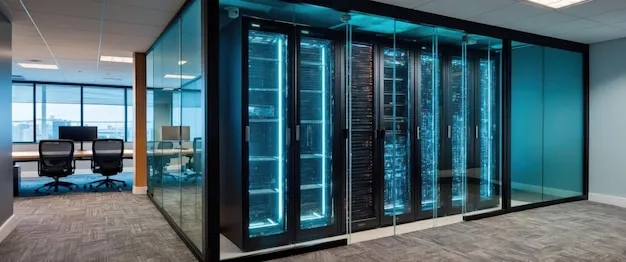
Photo: Richter Frank-Jurgen, CC BY-SA 2.0, via Wikimedia Commons
Ask a room full of enterprise technology executives whether they prefer to buy commercial software or build custom solutions, and the majority will express a strong default preference for buying. The reasoning is familiar: faster time to value, reduced engineering risk, vendor-managed maintenance, and a lower upfront capital commitment. These are reasonable considerations — when they are accurate.
The problem is that they are frequently not accurate. And the organizations that discover this tend to do so only after signing multi-year contracts, completing expensive integrations, and finding themselves locked into platforms that cannot accommodate the specific workflows, data models, or competitive capabilities their business actually requires.
The build-or-buy decision is not broken because the question is wrong. It is broken because most enterprises are answering it with incomplete information.
The Myth of the Lower-Cost Commercial Solution
The sticker price of enterprise software is almost never its actual cost. This is understood in principle by most procurement professionals, yet the full scope of total cost of ownership (TCO) is routinely underestimated in practice — particularly in the early stages of vendor evaluation, when enthusiasm is high and contract terms are still being negotiated.
Consider a mid-sized financial services firm evaluating a commercial workflow automation platform. The license fee is substantial but defensible relative to the estimated cost of building an equivalent solution. What the initial analysis frequently omits: the cost of the implementation partner engagement required to configure the platform for the firm's specific processes; the per-seat pricing escalation that occurs as adoption grows; the integration development required to connect the platform to existing systems of record; the ongoing professional services costs for customizations the platform cannot accommodate natively; and the renewal leverage the vendor holds after the firm's workflows have been built on top of the platform's proprietary data model.
Five years into that relationship, the cumulative expenditure often exceeds what a purpose-built solution would have cost — while delivering less flexibility and creating a dependency that is expensive to exit.
The Equally Real Risk of Undisciplined Custom Development
Acknowledging the hidden costs of commercial software is not an argument for building everything from scratch. Undisciplined custom development carries its own category of risk, and it has produced enough high-profile failures that organizational caution is entirely warranted.
The relevant failures, however, share a common characteristic: they were not failures of the build decision itself. They were failures of scope definition, architectural discipline, team structure, or delivery methodology. An organization that cannot articulate clear requirements, maintain engineering standards, or manage a software delivery program will struggle with custom development. It will also, eventually, struggle with commercial software — it will simply struggle more slowly and at greater ongoing expense.
The question is not whether custom development carries risk. It does. The question is whether that risk, properly managed, is greater or less than the risk of vendor dependency, capability limitation, and compounding license costs over the same time horizon.
A Framework for Making the Decision Honestly
Effective build-or-buy analysis requires evaluating several dimensions simultaneously rather than defaulting to organizational preference.
Competitive differentiation. If the capability in question is a direct source of competitive advantage — a proprietary workflow, a unique customer experience, a data processing model that reflects hard-won institutional knowledge — then off-the-shelf software will, by definition, provide the same capability to your competitors. Commercial solutions are designed to serve multiple customers. They are not designed to be distinctive.
Process conformity vs. process ownership. Commercial platforms require that your business processes conform to the platform's model. In areas where your processes are genuinely standard — expense reporting, basic HR workflows, commodity accounting functions — this conformity is acceptable and often desirable. In areas where your processes are a source of operational efficiency or customer value, conformity to a vendor's model means surrendering control over a business asset.
True TCO over a five-year horizon. Any honest comparison must account for implementation costs, integration development, training and change management, per-seat or consumption-based pricing growth, customization and professional services expenditure, and the cost of eventual migration or re-platforming. Commercial solutions that appear cost-effective at year one frequently invert that comparison by year three.
Exit cost and optionality. Vendor lock-in is not merely a philosophical concern. It is a financial liability. When evaluating a commercial platform, organizations should explicitly model the cost of migrating away from it in five years — including data extraction, integration rewrites, and retraining. That cost is a real component of the platform's price.
Internal capability and delivery track record. A build decision is only as sound as the organization's ability to execute it. This assessment must be honest. If internal engineering capacity is limited or delivery track record is poor, a strategic custom development engagement with an experienced external partner may represent lower risk than either building alone or buying a platform that will require years of expensive configuration.
When Custom Development Wins — Clearly
The cases where custom development produces superior outcomes are more numerous than conventional wisdom suggests.
A regional logistics provider that builds its own routing and dispatch system — one designed around its specific network topology, carrier relationships, and customer SLAs — will outperform a competitor using a generic TMS platform in every dimension that matters to its customers. A healthcare organization that builds a patient engagement layer tailored to its clinical workflows will deliver a meaningfully better experience than one constrained by the UX conventions of a commercial portal product.
In each case, the key variable is not whether custom development is categorically better. It is whether the capability in question is sufficiently central to the organization's value proposition that owning it — architecturally and operationally — produces compounding returns that a commercial platform cannot replicate.
Making the Right Call
The enterprises that navigate this decision most effectively share a common discipline: they evaluate build-or-buy as a strategic question, not a procurement question. They involve engineering leadership, business stakeholders, and financial analysts in a structured analysis that models realistic costs, honest capability assessments, and long-term strategic implications — not just year-one license comparisons.
At ProelioSoft, we work with enterprise clients to conduct exactly this kind of analysis before a technology direction is set. The goal is not to advocate for custom development as a default. It is to ensure that when organizations choose to buy, they do so with full visibility into what that choice costs — and when they choose to build, they do so with the architectural discipline and delivery rigor that makes that investment worthwhile.
The wrong choice, made confidently, is still the wrong choice. Getting this decision right is worth the effort to think it through.